


























Views
Downloads
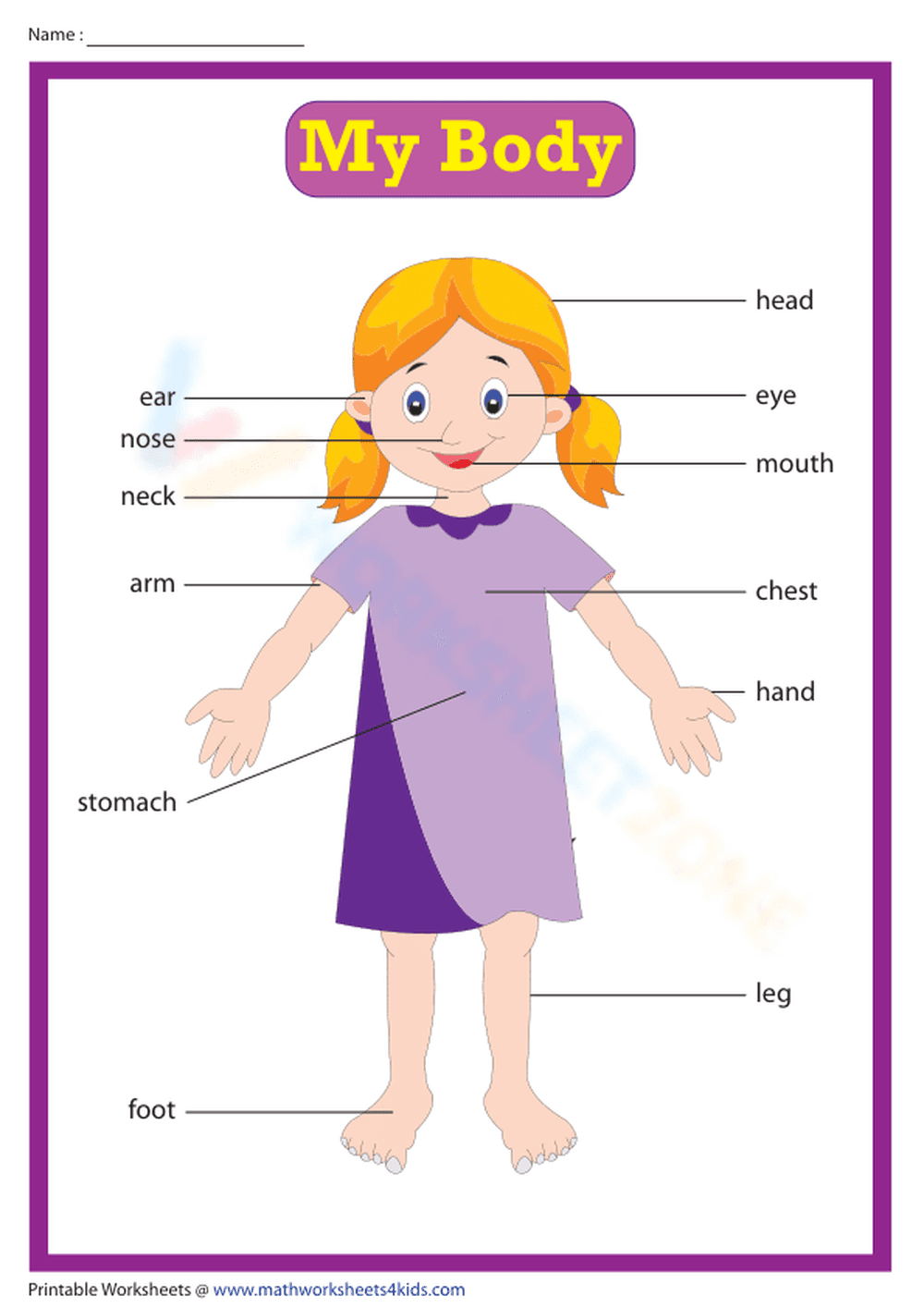

Essential Parts of the Body Chart | Kindergarten Science
Paste this activity's link or code into your existing LMS (Google Classroom, Canvas, Teams, Schoology, Moodle, etc.).
Students can open and work on the activity right away, with no student login required.
You'll still be able to track student progress and results from your teacher account.
Identify and label 11 primary human body parts with this vibrant Kindergarten science chart. This visual tool helps students build foundational anatomical vocabulary by connecting printed labels to a clear human diagram. It serves as a permanent classroom reference or an interactive show-and-tell aid that bridges the gap between abstract terms and physical self-awareness.
At a Glance
- Grade: Kindergarten · Subject: Science
- Standard:
K-LS1-1— Use observations to describe patterns of what plants and animals need to survive- Skill Focus: Human body part identification and labeling
- Format: 1 page · 11 labels · No-prep visual aid · PDF
- Best For: Circle time show and tell reference
- Time: 5–10 minutes
This high-resolution PDF contains a single-page full-color chart titled "My Body." It features a friendly cartoon illustration of a young girl with clear leader lines pointing to eleven specific anatomical points, including head, eye, mouth, chest, hand, leg, foot, stomach, arm, neck, nose, and ear. The clean layout uses a large, readable font suitable for early learners, surrounded by a professional purple border ideal for wall mounting or binder insertion.
Zero-Prep Workflow
- Print: Teachers can print the chart in full color to preserve visual distinction in about 30 seconds.
- Distribute: Provide individual copies to students or project the PDF onto a smartboard for whole-group instruction.
- Review: Guide students through a point-and-name review, matching chart labels to their own bodies in under 2 minutes.
This efficient workflow makes it an ideal emergency sub-plan addition or a quick transition activity between subjects.
Standards Alignment
This resource aligns with NGSS standard `K-LS1-1`, which emphasizes using observations to describe patterns in living things. By identifying human body parts, students develop observational skills necessary for understanding biological structures. It also supports CCSS.ELA-LITERACY.RI.K.7 by requiring students to integrate information from a visual diagram. Both standard codes can be copied directly into lesson plans, IEP goals, or district curriculum mapping tools.
How to Use It
Use this chart during direct instruction as a "Show and Tell" anchor. Have students come to the front and point to a part on the chart, then find that part on themselves or a partner. As a formative assessment, observe if students can correctly touch their "neck" or "stomach" when prompted verbally without looking at the chart. Expect this activity to take approximately 10 minutes of active classroom engagement.
Who It's For
This chart is designed for Kindergarten students, English Language Learners (ELL), and students with speech-language goals. The clear visual cues provide essential scaffolding for children developing expressive vocabulary. It pairs naturally with an anatomy-themed reading passage or a "Head, Shoulders, Knees, and Toes" direct instruction lesson to reinforce the auditory and visual connection to science terminology.
Biological identification in early childhood education is a critical precursor to understanding health and life science systems. High-quality visual aids in Kindergarten science provide the necessary scaffolding for students to master the K-LS1-1 standard, which focuses on observing patterns in living organisms. This worksheet facilitates the development of domain-specific vocabulary and observational literacy, improving retention rates for anatomical terms in five-year-olds. The "My Body" chart acts as a robust tool for educators to document student progress toward health standards and science-based observational goals, supporting early childhood development through clear, structured, and accessible visual information.


